Duolingo is the default answer to "how do I learn a language" for a reason: it's free to start, it's everywhere, and the owl has become a genuine cultural meme. But defaults aren't the same as best fits, and if you're reading this, something about Duolingo probably isn't working for you — the lessons feel repetitive, the streak has turned into a source of guilt rather than motivation, or months in, you still can't order coffee in the language you're supposedly learning. None of that means you failed. It usually means the tool and your actual goal have drifted apart.
Why so many people go looking for an alternative
To be fair to Duolingo, it earned its dominance honestly: gamification made daily practice feel like a game rather than homework, and for beginners in the first few months, that's genuinely effective. The complaints tend to show up later, once the novelty wears off. The streak, which started as a fun motivator, becomes a source of quiet dread — missing one day after a 200-day run feels disproportionately bad, and some people report doing rushed, low-quality lessons purely to protect a number rather than to learn anything. The exercises themselves can start to feel repetitive once you're past the beginner tier, heavy on matching and multiple choice, light on actually producing language yourself. And the free version's "hearts" system, where making mistakes costs you lives you have to wait out or pay to refill, turns learning from mistakes — which is how learning usually works — into something to be avoided rather than embraced.
None of this makes Duolingo bad. It makes it a specific tool, tuned for specific outcomes (early motivation, broad vocabulary exposure, daily habit formation through gamification), and like any specific tool, it eventually stops being the right one for some of the people who started with it.
Figure out what's actually not working first
"I need a Duolingo alternative" usually means one of four very different problems, and mixing them up is why so many people bounce between five apps and make progress in none. Before picking a replacement, it's worth being honest about which one is yours.
- You understand grammar rules but can't produce sentences under pressure — you need structure and explanation, not more matching exercises.
- You can read and recognize words but freeze the moment a real person talks to you — you need conversation practice, not more app time.
- You keep forgetting vocabulary a week after learning it — you need spaced repetition, done properly and consistently.
- You know exactly what you should be doing and still don't open the app most days — your problem isn't the curriculum at all, it's the habit.
The first three problems are solved by picking a better-fitting app. The fourth one usually isn't, and we'll come back to it, because it's the one most "best alternatives" lists quietly ignore.
For structured grammar: Babbel
If Duolingo's bite-sized, game-like exercises leave you able to recognize phrases but unable to explain why a sentence is built the way it is, Babbel is usually the first recommendation, and for good reason. Its lessons are built around real conversational scenarios with explicit grammar notes attached, closer to a structured course than a set of flashcards. You move through a curriculum designed by language teachers rather than an infinite stream of algorithmically served exercises, which makes it a strong fit for people who want to understand the mechanics of a language, not just pattern-match their way through it.
The tradeoff is that Babbel is less playful. There's no streak flame, no leaderboard, and the gamification that keeps casual Duolingo users coming back is mostly absent. For someone who was motivated by the game layer, that can make Babbel harder to stick with — which is worth knowing before you switch and assume the new app will automatically solve your consistency problem too.
For feedback and guided practice: Busuu
Busuu sits in a similar lane to Babbel — structured lessons, sensible progression — but adds a community layer where native speakers review the sentences and exercises you submit. That feedback loop is genuinely useful for catching mistakes that self-study alone won't surface, particularly around word order and idiomatic phrasing that "sounds right" to a computer but wrong to a person. If you've hit the ceiling where an app can correct your typing but not your phrasing, this kind of human review is often the missing piece.
The catch is timing: feedback from other users isn't instant, so Busuu works better as a supplement to daily practice than as the daily practice itself. It rewards patience and consistency more than it rewards a five-minute session squeezed in before bed.
For vocabulary that actually sticks: Anki and Memrise
If your specific complaint about Duolingo is that words go in one week and out the next, the issue isn't motivation — it's spacing. Anki is the purest version of spaced repetition available: a flashcard engine with no gamification at all, where you build or import decks and the algorithm decides exactly when you're about to forget a card so it can resurface it right before that happens. It's not pretty and it has a real learning curve, but for raw vocabulary retention over months and years, few tools rival it.
Memrise takes the same spaced-repetition core and wraps it in a friendlier interface, with clips of native speakers using the words in context instead of bare flashcards. It's a reasonable middle ground if Anki's minimalism feels like too much friction, trading a bit of retention efficiency for something you'll actually open more often.
For speaking and listening: Pimsleur
Duolingo is a visual, tap-and-match experience, which means it does surprisingly little for your ear and your mouth. Pimsleur flips that entirely: it's built around audio-only lessons where you listen to a phrase, repeat it out loud, and get pulled back into it at increasing intervals within the same session. It's closer to how you'd actually pick up a language by immersion than to a vocabulary quiz, and it's particularly good for pronunciation and the reflexive kind of recall you need in an actual conversation, where you don't have three seconds to read a multiple-choice option.
The downside is pace — audio-based learning is slower to show visible "progress" in the way a streak or a level-up screen does, and there's no writing practice at all, so it works best paired with something that covers reading and grammar.
For real conversation: HelloTalk and italki
No app, however well designed, fully replaces talking to an actual person, and this is the gap Duolingo is furthest from closing. HelloTalk connects you with native speakers of your target language who are, in turn, learning yours, so you trade corrections and practice in a language-exchange format that costs nothing but time. italki takes the same idea and adds paid, professional tutors when you want structured feedback rather than a language-exchange partner picking things up as they go.
Both solve the specific anxiety of "I understand the app but freeze in real conversations," because that skill genuinely only improves with live back-and-forth. Neither is a full curriculum on its own, though — they work best layered on top of whatever's teaching you grammar and vocabulary in the background.
For reading in context: LingQ and Beelinguapp
Some learners retain language far better through reading than through drills, and LingQ is built entirely around that idea: you import or choose real articles, stories, or transcripts in your target language, tap unfamiliar words to get instant definitions, and the app tracks which words you already "know" across everything you read. It's less structured than a course, which suits people who already have some foundation and want volume and exposure rather than another set of graded exercises.
Beelinguapp takes a gentler version of the same approach with side-by-side bilingual texts, letting you read a story in your target language with the translation visible right next to it — a good fit for beginners who find LingQ's word-tracking system slightly overwhelming to start with.
The alternative that isn't really a competitor: LangLocker
Here's the honest part: if your actual problem is the fourth one from earlier — you know what to do, you even like an app you've picked, but you just don't open it most days — none of the apps above fix that, because they all assume you'll show up. LangLocker doesn't compete with Duolingo, Babbel, or Anki on curriculum depth. It solves a narrower, different problem: getting you to actually practice, several times a day, without relying on remembering to.
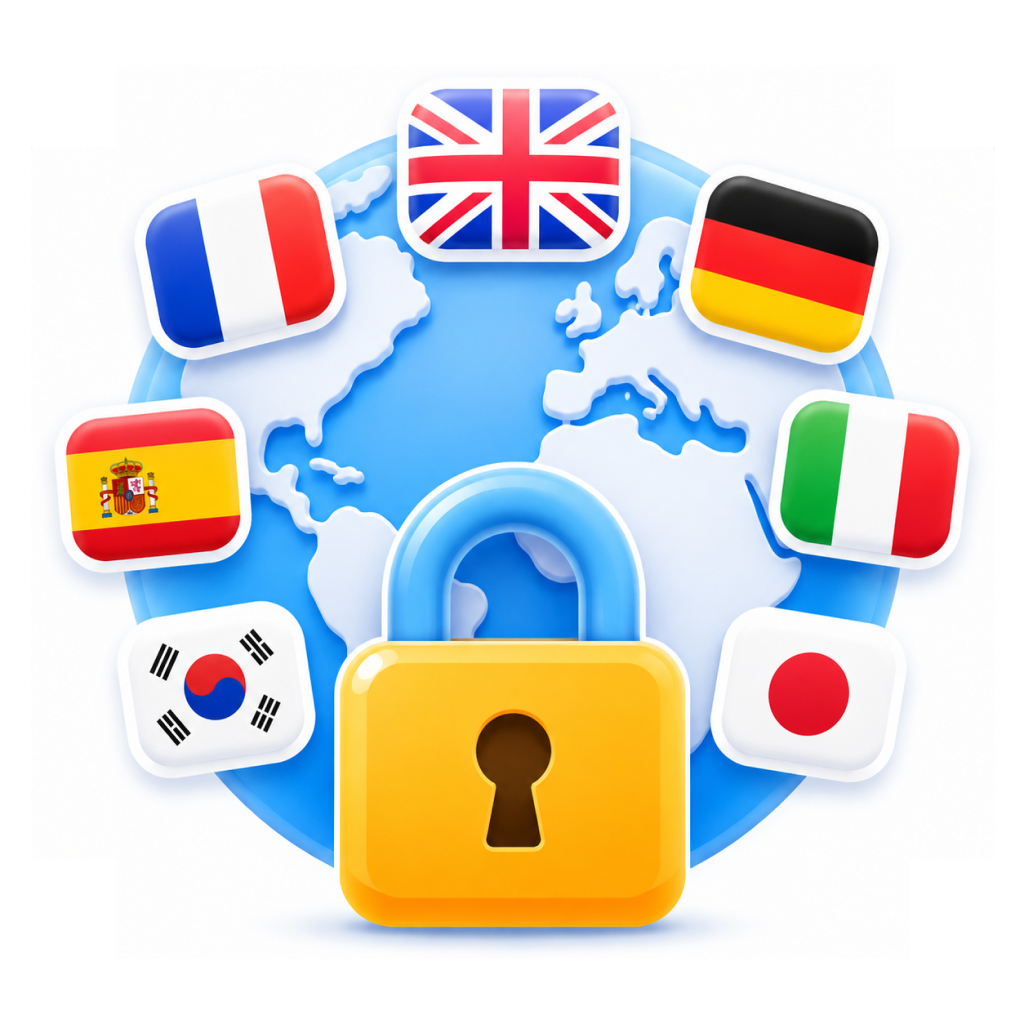
The way it works is simple. You pick the apps that already eat your attention without asking — Instagram, TikTok, whatever it is for you — and set a blocking schedule. When you try to open one of those apps during a blocking window, LangLocker shows you a short lesson first, usually under a minute, in one of seven languages (English, French, German, Italian, Spanish, Korean, or Japanese). Finish it, and the app you were reaching for opens normally. The reflex that used to cost you time now hands you a small amount of vocabulary instead, dozens of times a day, without you ever deciding to "study."
It isn't a replacement for Babbel's grammar explanations or italki's live conversation practice — it's currently iOS and iPad only, and it teaches through short spaced drills rather than a full course structure. What it's genuinely good at is the one thing that undermines every other app on this list equally: showing up consistently, on the days you didn't plan to.
How to actually choose
Rather than installing four apps and abandoning three within a month, match the tool to the specific gap:
- Want to understand grammar properly → Babbel.
- Want human feedback on your mistakes → Busuu.
- Want vocabulary that survives past next week → Anki (if you like structure) or Memrise (if you want something friendlier).
- Want to sound less robotic and understand fast speech → Pimsleur.
- Want to get over the fear of actually talking → HelloTalk or italki.
- Want exposure through real content instead of exercises → LingQ or Beelinguapp.
- Want to actually open whichever of the above you've already chosen, consistently, without relying on memory or motivation → LangLocker, running alongside it.
It's worth noticing that the last item on that list isn't really competing with the other six — it's the thing that makes any of them work if inconsistency has been your real, quieter problem all along.
A note on cost before you switch
Most of these apps follow the same basic pattern as Duolingo: a usable free tier with real limitations, and a paid subscription that removes them. Babbel and Busuu are typically billed per language, with the price dropping noticeably for longer commitments, which rewards people who are confident they'll stick with one language rather than sampling several. Anki is free and open-source on desktop and Android, with a one-time paid app on iOS that funds ongoing development. Pimsleur and italki sit at the more expensive end — Pimsleur because it licenses a long-established audio methodology, italki because you're paying real tutors for real time, not a subscription to software. HelloTalk, LingQ, Memrise, and Beelinguapp all offer meaningfully usable free versions if budget is the deciding factor. None of this should be the only reason you choose one over another, but it's worth checking before you commit to a plan you won't renew past the trial.
Takeaway
There's no single best Duolingo alternative, because "best" depends on which specific gap Duolingo left open for you: grammar, conversation, retention, listening, or reading. Pick based on that gap rather than on whichever app has the loudest marketing. And if you've already picked the right tool more than once and still aren't using it, the missing piece probably isn't another curriculum — it's something that gets you to open it in the first place.